Jump to a section
What is Bike Insurance?
Benefits of Having Bike Insurance
Financial Protection
Theft Security
Cashless Repairs
Own Damage Protection
Add-Ons
Who Should Buy Bike Insurance In India?
Types of Bike Insurance In India
Standalone Own-Damage Bike Insurance
Third-Party Bike Insurance
Comprehensive Bike Insurance
Difference Between Third-Party Vs Own Damage Vs Comprehensive Bike Insurance
| Feature | Third-Party Bike Insurance | Own-Damage Insurance | Comprehensive Insurance |
|---|---|---|---|
| Coverage Scope | Injury or damage to the third party | Damage, theft, fire, or loss of your own bike | Covers both third-party and own damage |
| Legal Status | Mandatory by Indian law | Cannot be bought without having an active third-party bike insurance | Optional |
| Own Bike Protection | Not covered | Fully covered | Fully covered |
| Premium Cost | Lowest | Moderate | Higher, as it covers both |
| Add-on Covers | No add-ons | Add-ons are available | Add-ons are available |
| Ideal For | All bike owners in India | Riders who already have a separate third-party policy | New or high-end bikes that need complete financial security |
What Does Bike Insurance Cover and Not Cover?
Inclusions
Accidents
Your bike is insured against any damage due to an accident, including collision or overturning.Theft
Financial compensation will be provided in case of theft of your insured bike.Fire
The policy covers damage to your bike caused by fire, explosion or spontaneous ignition.Natural Calamities
Your bike is protected against damage caused by natural events such as floods, earthquakes, storms and cyclones.Man-made events
Coverage is available for damage resulting from events such as riots, strikes and vandalism.Third-party liability
The policy covers your legal liability for injury, death or property damage caused to a third party by your insured bike.
Exclusions
Riding Without a License
Bike insurance does not cover claims arising when the rider does not hold a valid driving licence.Riding Under the Influence
Damage incurred while riding under the influence of intoxicating substances like alcohol or drugs will normally not be covered.Racing Activities
You may not get compensation for loss incurred while using your bike for racing and performing other kinds of stunts.Unauthorised Usage
If you have used the bike for a purpose other than mentioned in the contract, the claim will be rejected.Policy Lapse
Incidents that occur after the expiry of the policy period will not be covered.
Is Third-Party Coverage Mandatory In India?

Legal Requirement

New Vehicle Rules

Injury Compensation

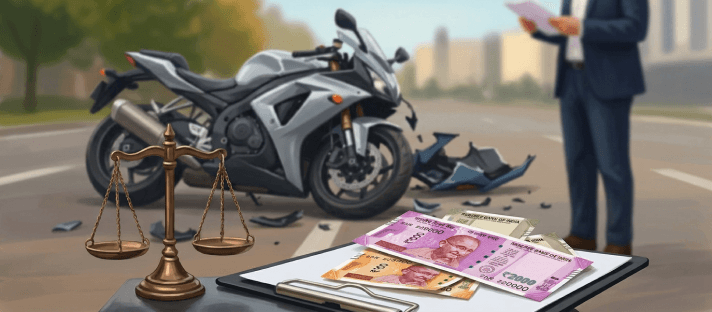
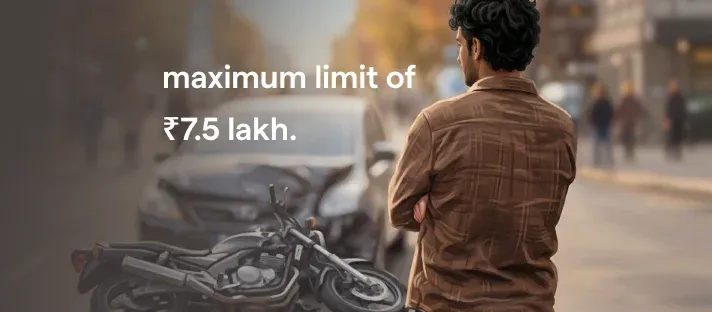
Property Damage Cap

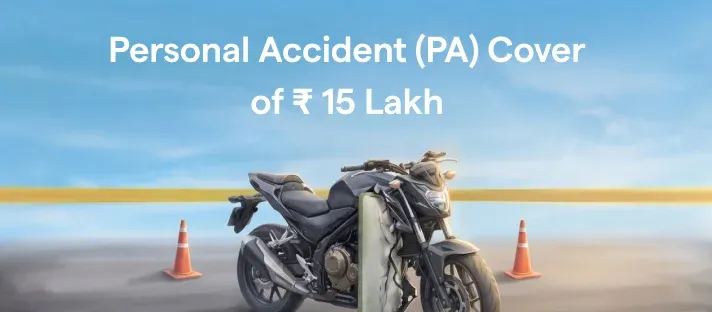
Compulsory Personal Accident Cover

Victim Protection

Driver Financial Safety

Public Welfare
Popular Add-ons Available with Bike Insurance
Return to Invoice
Zero Depreciation
Roadside Assistance
Consumables Cover
Engine Protector
No-Claim-Bonus
Emergency Medical Expenses
Electric Surge Cover
Garage Cash
Tyre and Wheel Rim Protect
EMI Protector
Additional Personal Accident
What is the Difference Between E-Bike Insurance and Bike Insurance?
| Feature | Regular Bike Insurance | E-Bike Insurance |
|---|---|---|
| Protection | Internal combustion engine, fuel systems and gearbox | Battery and the electrical system |
| Legally Mandatory | Legally compulsory for all fuel-driven two-wheelers on public roads | Compulsory for any electric two-wheeler that has a top speed exceeding 25 km/h or a motor power greater than 250 Watts |
| Cost of Premium | Usually lower because of standardised and mechanical repair costs | Usually higher because the battery and the specialised electronic parts are expensive |
| Key Risk Factors | Road accidents, mechanical wear and tear and fuel system damage | Battery short circuits and electrical damages |
| Special Add-Ons | Engine protector, zero depreciation and roadside assistance | Battery protection cover and EV charger cover |
Is Insurance Necessary for Electric Two-Wheelers (EVs)?
Factors Affecting Bike Insurance Premiums
What is Insured Declared Value (IDV)?
| Age of the Bike | % Depreciation |
|---|---|
| Less than 6 months | 5% |
| Exceeding 6 months but less than 1 year | 15% |
| More than 1 year but not exceeding 2 years | 20% |
| Exceeding 2 years but less than 3 years | 30% |
| More than 3 years but less than 4 years | 40% |
| More than 3 years but not exceeding 4 years | 50% |
What Documents are Needed to Buy or Renew Bike Insurance?
Documents to Buy a New Bike Insurance
- ✓
Registration Certificate
It will prove your vehicle ownership and also provide your bike’s engine and chassis numbers. - ✓
Identity Proof
You need to provide your Aadhaar card, PAN card or voter ID. - ✓
Address Proof
For this, you need to submit utility bills or passport. - ✓
Driving License
Provide proof that you are eligible to ride.
Documents to Renew Bike Insurance
- ✓
Previous Policy Details
Provide your old policy number or a copy of the policy document to track your NCB status. - ✓
Registration Certificate
You will need to provide your bike’s registration number and a copy of its Registration Certificate (RC). - ✓
Pollution Under Control Certificate
A valid PUC certificate is required to confirm that your bike complies with applicable emission norms. - ✓
Driving Licence Details
Keep your valid driving licence details handy to verify your identity and eligibility to ride. - ✓
Inspection Report
It is only required if your previous policy has expired or lapsed for an extended period.
Benefits of Renewing Your Policy Before Expiry
Bike insurance renewal on time not only keeps you legally compliant, but it also keeps you financially protected. Apart from these, here are some of the key benefits of renewing your policy before expiry:
-
Get Continuous Coverage
Renewing your bike insurance before the expiry date ensures that your coverage continues without a break. This helps you stay financially protected against covered risks and ensures that your mandatory third-party insurance remains active while you ride.
-
Stay Legally Compliant
Once your policy expires, you no longer have valid insurance coverage, which can leave you non-compliant with the law if you continue to ride. Renewing your policy on time helps you stay legally compliant.
-
Prevent Financial Burden
Having an existing active policy in bike insurance will help prevent any financial surprises from accidents, damage to the bike, or third parties that are involved in the accidents. Failure to renew the bike insurance on time may mean you will have to pay for all these expenses on your own.
-
Get Rid of Break-in Issues
Timely renewal of your bike insurance will help you avoid any inconvenience caused by an expired policy. If your policy has already expired, the insurance company may require you to take your bike for inspection before they give you coverage. Therefore, timely renewal will make the process easier for you.
-
Maintain No Claim Bonus
The No Claim Bonus (NCB) ensures that you get rewarded for not making any claims through the discount on your own damage insurance policy. On-time renewal of the policy will help keep your NCB updated. Once the policy has lapsed past the relevant period, you might end up losing this benefit.
-
Avoid Fines and Challans
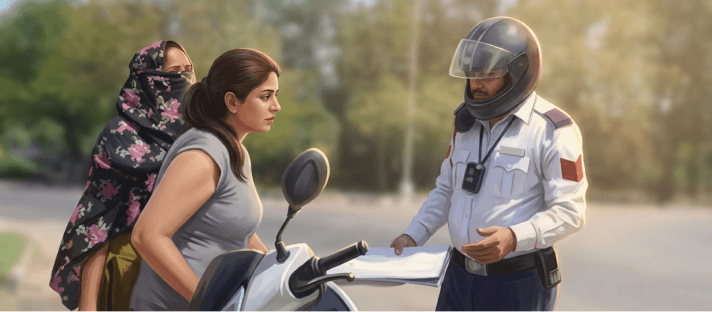
If you ride your bike without having legally valid insurance coverage, you may incur fines. Renewing your policy on time allows you to keep away from unnecessary challans and other costs related to being uninsured.
-
Avoid the Last-Minute Hassle
Renewing your bike insurance policy on time allows you to have sufficient time to review your insurance, find better options for yourself and sort out all the document-related matters. This way, you avoid the rush that comes when your insurance is about to expire and take time to see what you are getting into.

When Should One Consider Claiming Bike Insurance?
You should consider claiming bike insurance only when you can justify using the policy benefits for significant claims. Making a claim can create an impact on your No Claim Bonus. Therefore, it is vital to balance the cost of damage with the NCB impact on your premium.
Think about making a claim for bike insurance in scenarios such as:
- When there is severe damage done to your bike and the cost of repair is high
- In case your bike is stolen
- Your bike gets damaged due to any fire or explosion
- In case of legal liability for injury, death or property damage caused to a third party
For instance, let us consider that there is an accident involving your bike and the repair cost comes to ₹25,000. In such a case, making a claim might work out well, provided your policy covers it and your deductible is ₹1,000. However, if the repair cost amounts to only ₹2,000, then filing a claim might not be justified.
How to Raise a Bike/Two-Wheeler Insurance Claim?
1
Filing of FIR
2
Inform Our Team
3
Submit Details of Claim
4
Provide Documents
5
Cooperate with Inspection
6
Bike Repair
Why Do Bike Insurance Claims Get Rejected?
How Can You Avoid Bike Insurance Claim Rejection?
A bike insurance claim can be rejected for several reasons, but many of them can be avoided with the right precautions. Here are some key tips to help you:
- Ensure you renew your two-wheeler/bike insurance on time. It is essential because insurance companies do not provide coverage for incidents under an expired policy.
- Inform your insurer as soon as possible. Do not wait for 3-4 days. Try to inform them within 24 hours.
- Ensure you carry valid documents. Plus, your driving licence and registration certificate should match your name.
- Always wait for the insurer to send an assessor to examine the damage. Once your claim is approved, you can take your bike to the network garage for repair.
- Never ride under the influence of alcohol or drugs and do not participate in any illegal activities.
- Ensure you capture clear evidence of the damage and videos of the accident site.